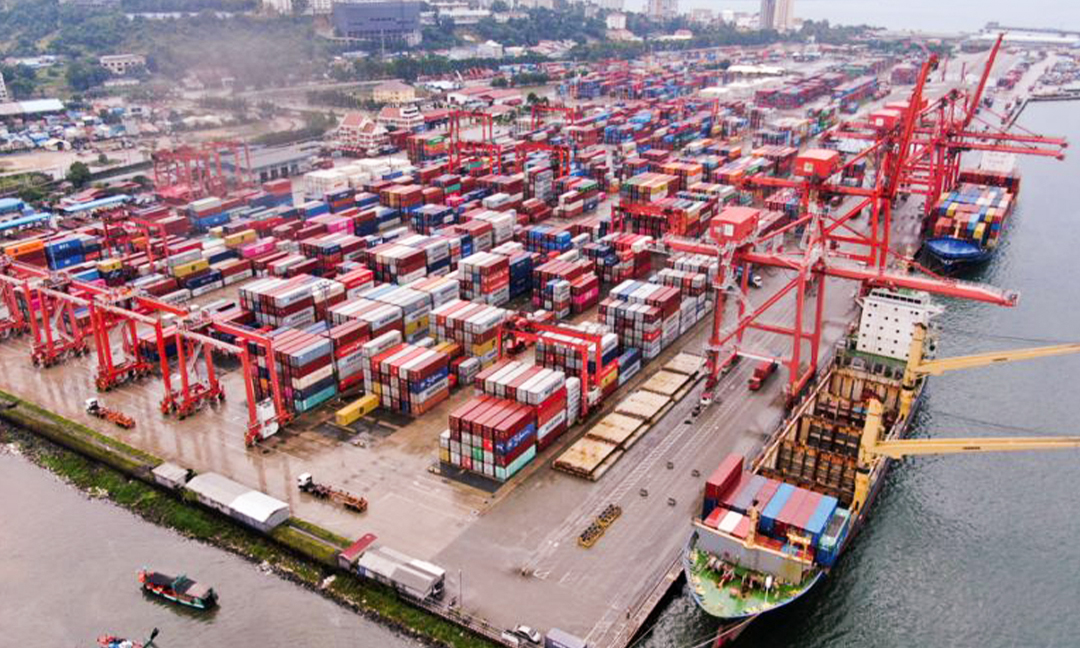
Despite facing global economic headwinds, Cambodia’s economy has demonstrated remarkable resilience, maintaining a steady growth trajectory. According to a recent report by the Asian Development Bank (ADB), the country’s GDP is projected to expand by 5.2% in 2024, driven by strong domestic demand and robust exports.

Key sectors contributing to Cambodia’s growth include garment and footwear manufacturing, tourism, and agriculture. The garment and footwear industry continues to be a major driver of economic activity, with exports to key markets such as the United States and the European Union remaining strong.
Tourism, another vital sector, has shown signs of recovery following the pandemic. International visitor arrivals have been steadily increasing, boosting related industries such as hospitality, transportation, and retail.
“However, the construction and real estate sectors are going through a correction, following rapid growth in prior years,” Kenichiro Kashiwase, IMF mission chief for Cambodia, said at the conclusion of a visit to Cambodia from Sept. 17 to 30.

Kashiwase said risks to the outlook have shifted to the downside, notably due to weaker-than-projected demand from advanced economies, geoeconomic fragmentation, and high domestic private debt.
“Rising NPLs in the tourism and real estate sectors also pose risks to growth and financial stability,” he said. “On the upside, a continued loosening of global financial conditions would support the recovery.”
Kashiwase said inflation has moderated to an average of 1.6 percent year-on-year in the first half of 2024, down from 2.1 percent in 2023, reflecting global commodity price trends and weak domestic demand growth.
“For the full year, inflation is projected to reach around 1.5 percent before converging towards the long-term trend of 3 percent,” he said.
While Cambodia’s economy is generally positive, there are challenges to address. Rising inflation, coupled with rising interest rates, could impact consumer spending and investment. Additionally, the country’s dependence on external factors, such as global trade and economic conditions, makes it vulnerable to external shocks.
To mitigate these risks, the Cambodian government has implemented various measures to support economic growth, including infrastructure development, investment promotion, and social safety nets. These efforts aim to create a more diversified and sustainable economy.
Overall, Cambodia’s economic outlook remains optimistic, with the country poised to continue its growth trajectory in the coming years. However, it is essential to address emerging challenges and maintain a focus on sustainable development to ensure long-term prosperity.